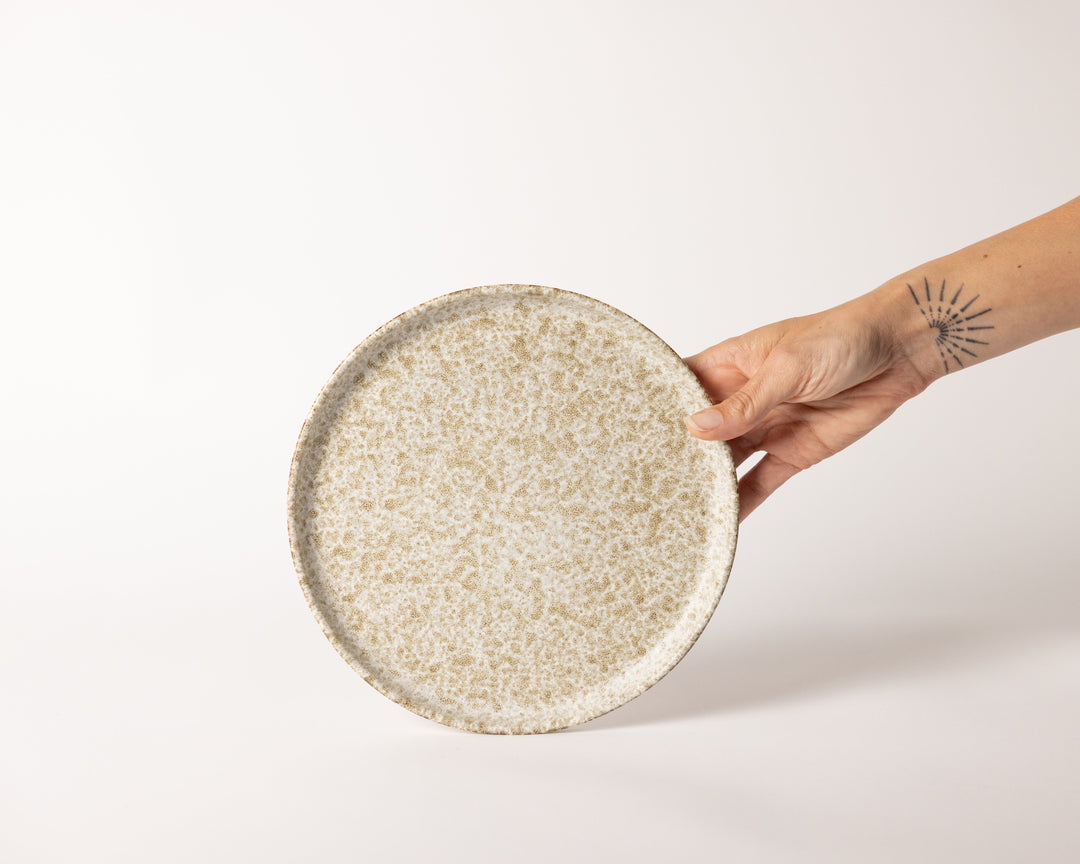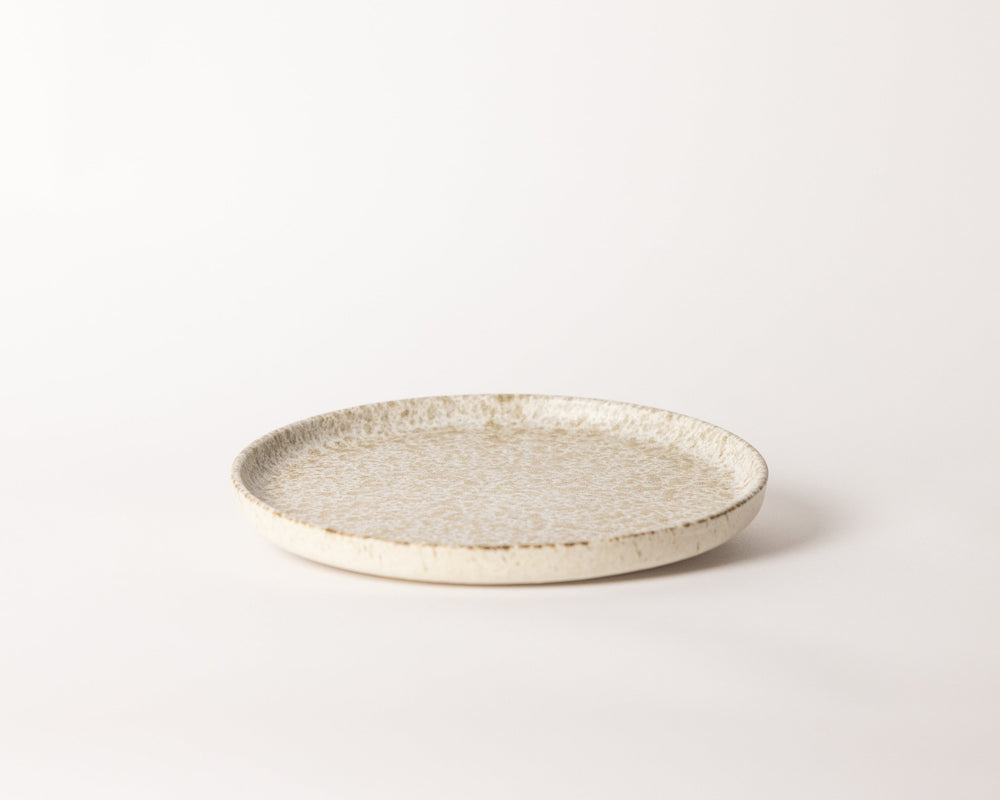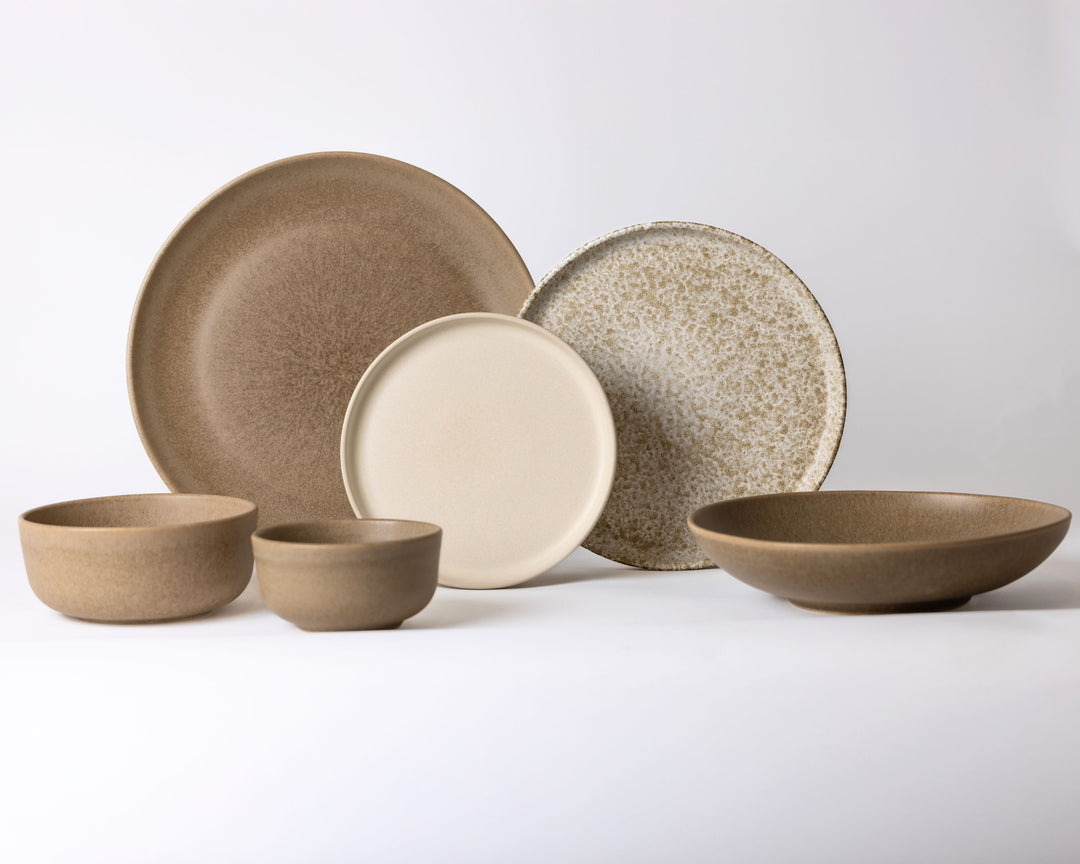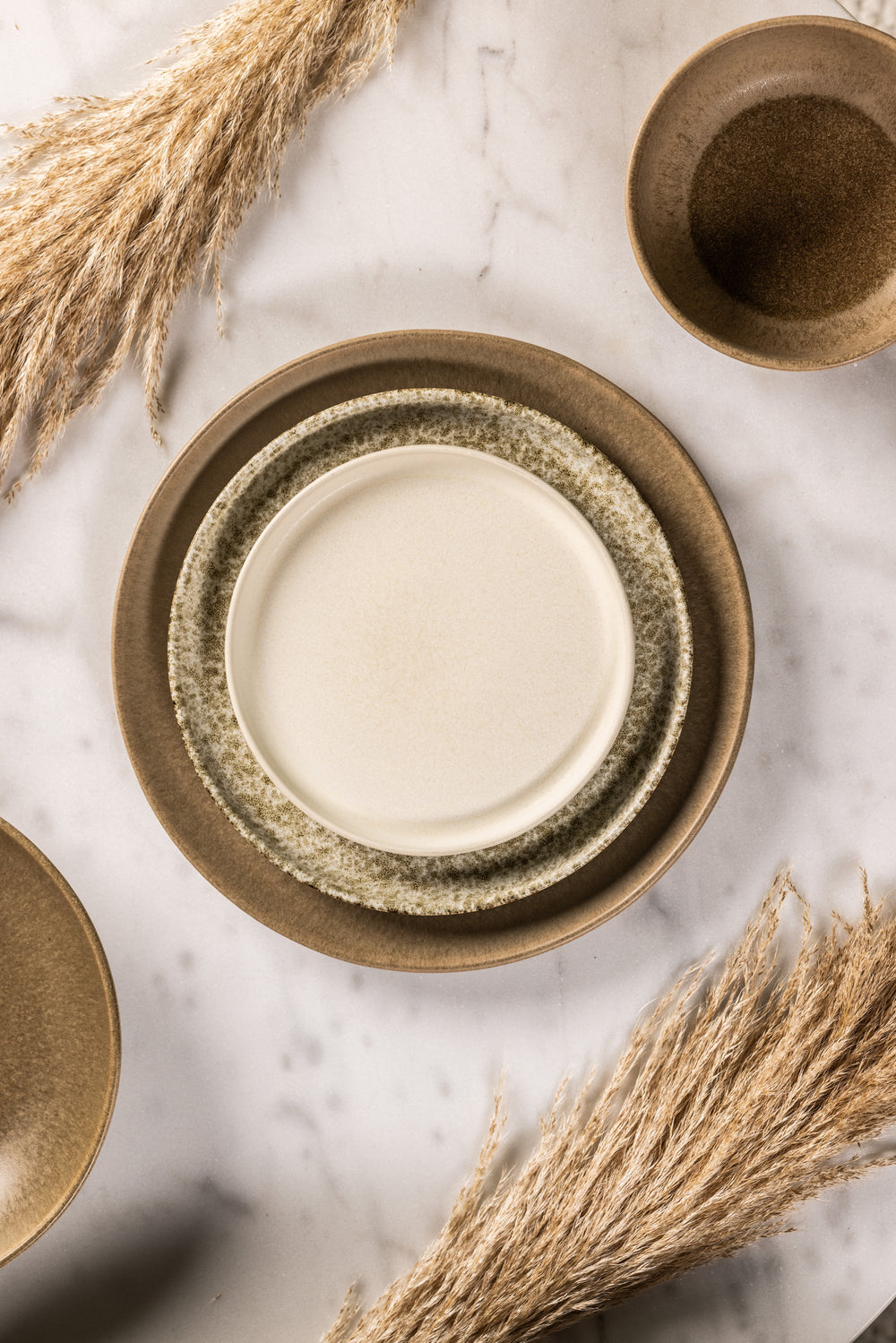

What is reactive glaze? This is what makes every coffee cup unique

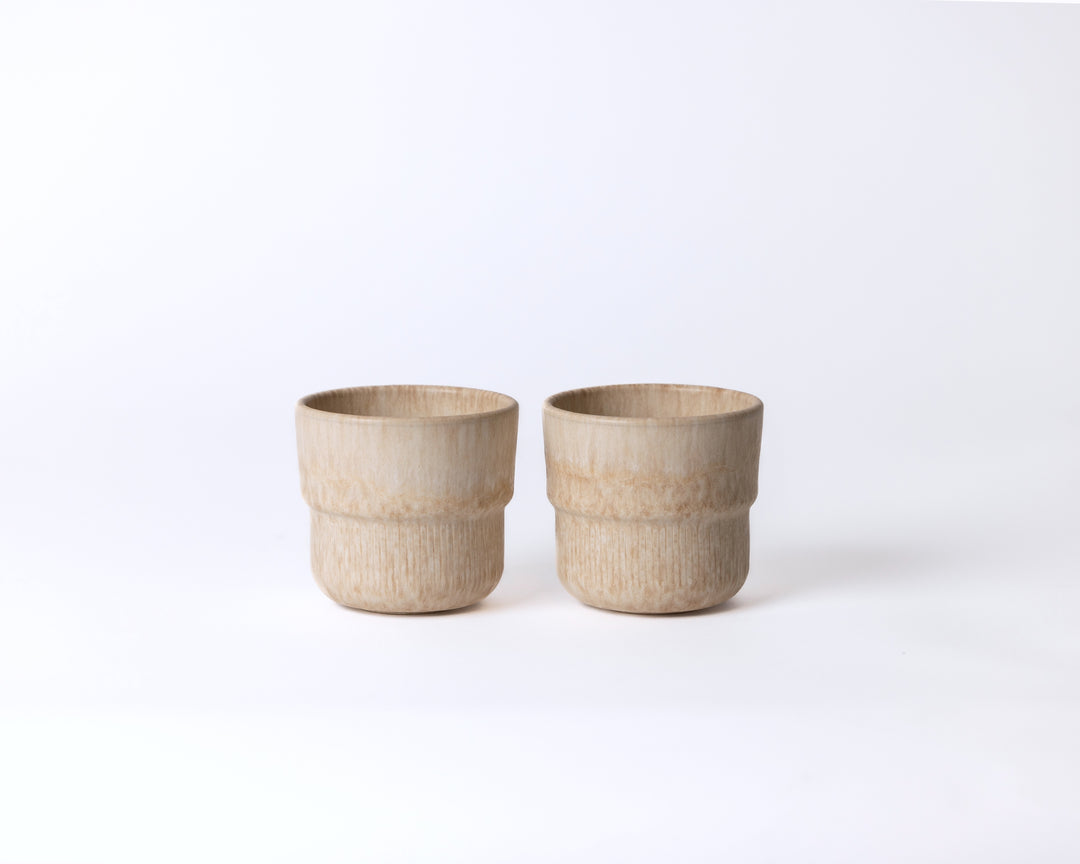
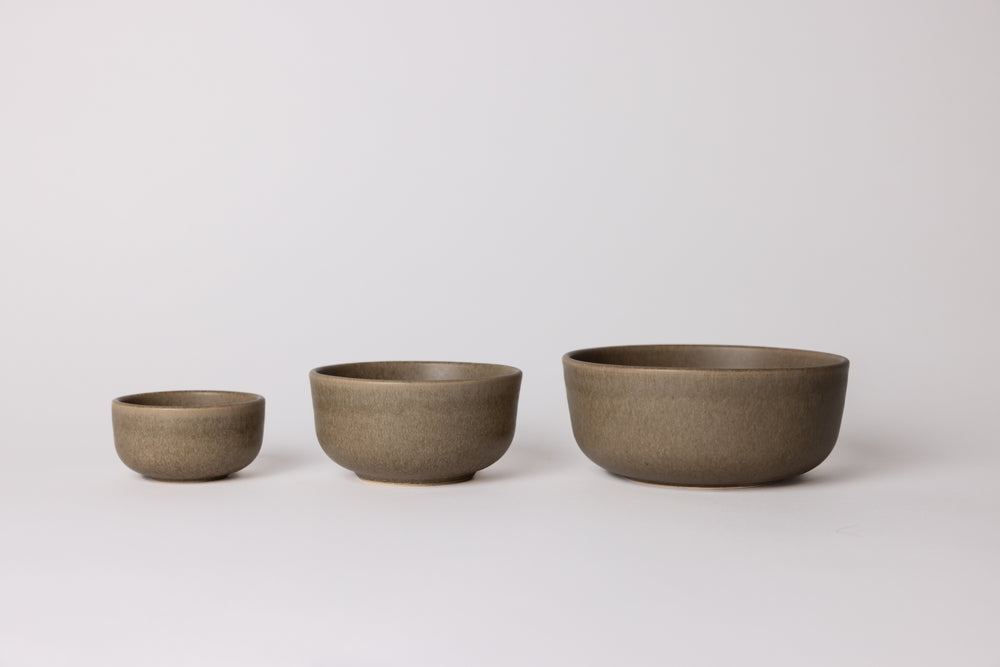
If you place our coffee cups side by side, you'll immediately see it: no two cups are exactly alike. The same color scheme, yet subtly different in hue, texture, and character. That's no accident. That's reactive glaze. In this blog, we'll explain what it is, how it works, and why it makes our ceramics so special.
What is reactive glaze?

Reactive glaze is a special type of glaze that changes color during the firing process in the kiln. As the name suggests, the glaze reacts. To the heat, to the oxygen in the kiln, and to the underlying clay. This reaction is never entirely predictable, and that's precisely what makes it so beautiful.
With regular glaze, you know beforehand what you'll get: a uniform color, consistent across every piece. Reactive glaze works differently. Its chemical composition causes the glaze to move, fuse, and become thinner or thicker in certain areas during firing. This gives each piece of ceramic its own pattern of color and texture.
At Mimo, we heat our coffee cups and dinnerware sets in the kiln at high temperatures. That's when the glaze starts to do its work. What comes out is never exactly what went in.
Why does the color change in the kiln?
The color change has everything to do with the minerals in the glaze. Many reactive glazes contain iron oxide, titanium, or other metal compounds. These react at high temperatures in a way that cannot be fully controlled beforehand.
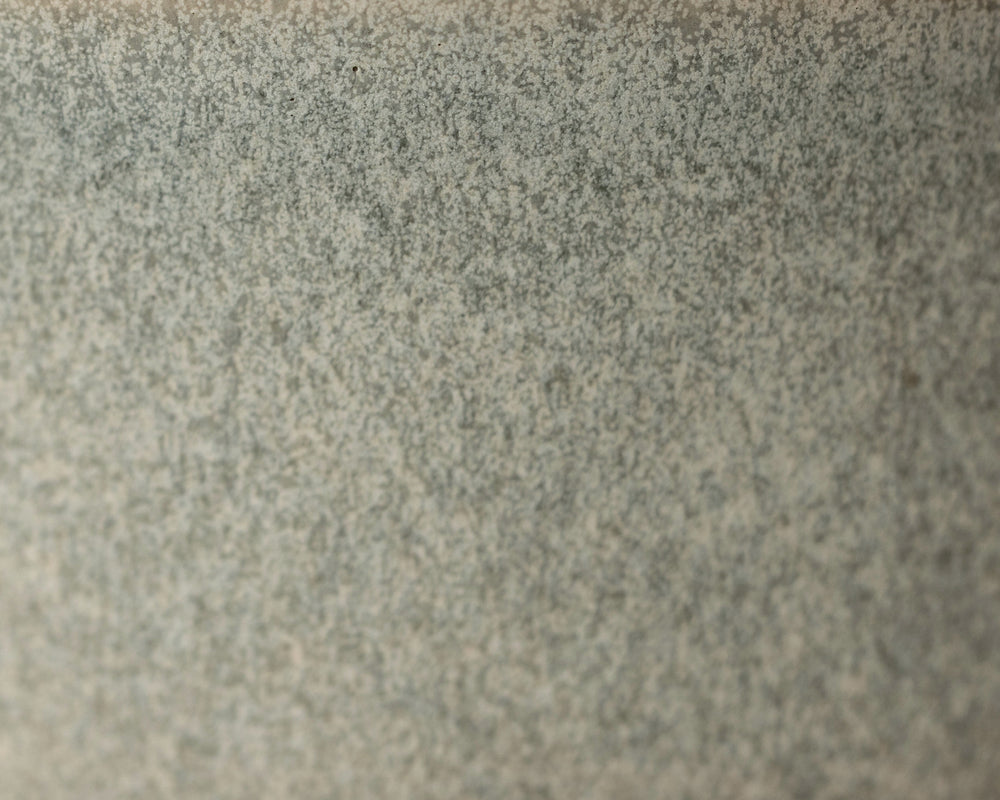
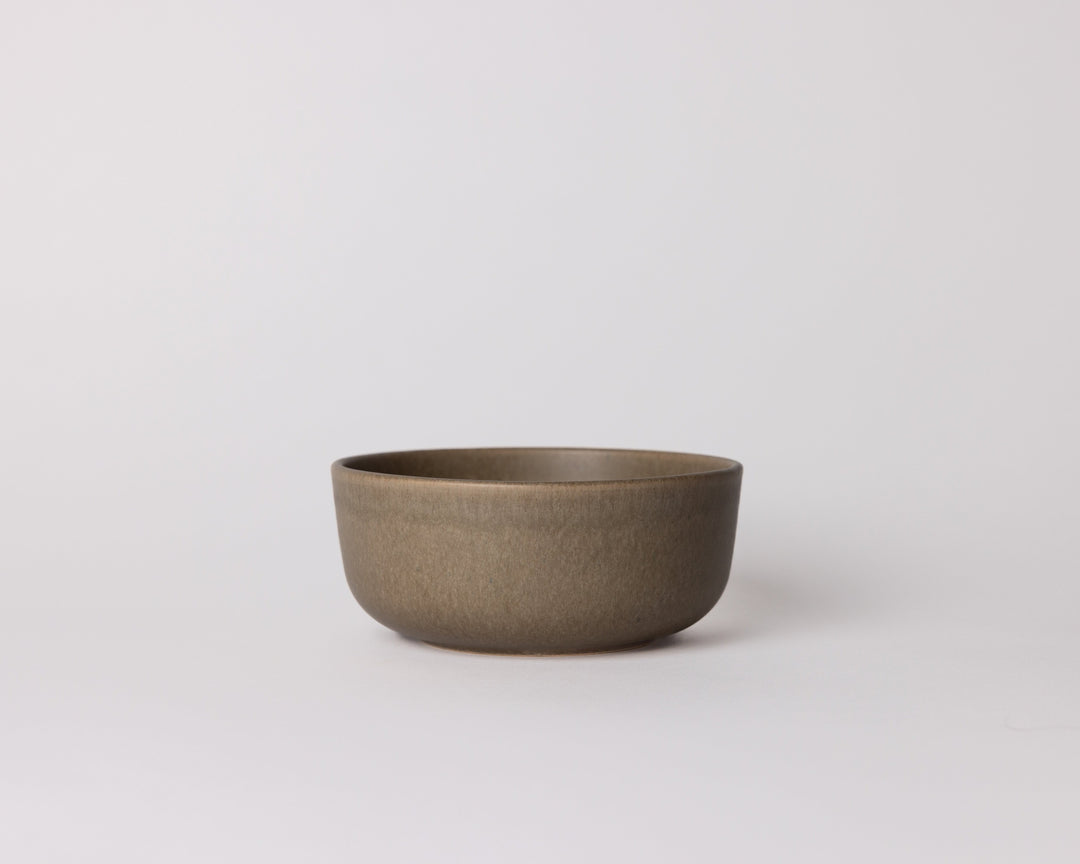
Take our Deep Moss, a dark green color inspired by the Portuguese forests. The glaze goes into the kiln as a uniform layer but emerges with subtle variations in hue. A little darker here, a little lighter there. Perhaps a different sheen on the rim than on the bottom. That's the reaction of the minerals to the heat.
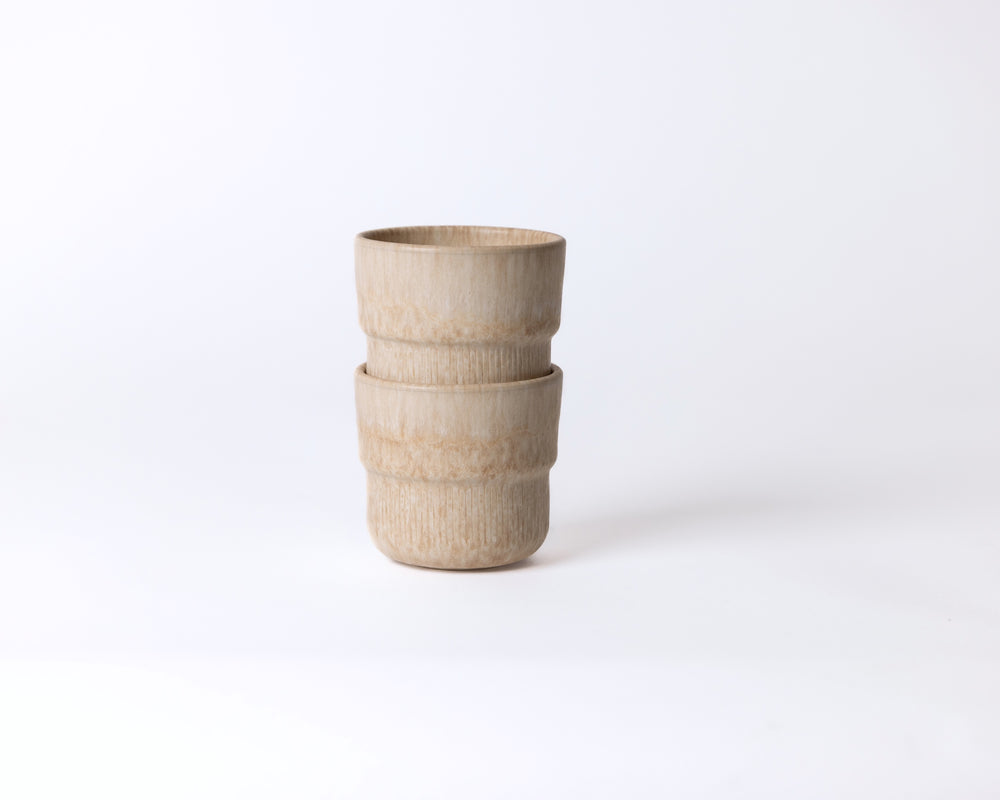
The same applies to a coffee cup in Broken Shells or On The Rocks. Each piece bears the marks of the firing process. This makes every coffee cup unique, just like every plate, bowl, and serving dish in our collection.
What does this mean for daily use?

A question we often get is: is reactive glaze suitable for daily use? The answer is yes, without a doubt.
Our coffee cups and dinnerware sets are dishwasher-safe and microwave-safe. The reactive glaze does not affect the durability of the ceramics. The color does not fade, and the texture does not change with use. You can simply use it every day. You can find more about our material on our ceramic tableware page.
Each coffee cup with its own character
At Mimo, reactive glaze is not an afterthought. It's a choice. We could have opted for uniform, standardized colors. But that doesn't align with what Mimo stands for.
We create ceramics in small batches, hand-finished by skilled artisans in Portugal. Each piece is different because each piece is hand-finished and was in the same kiln, but in its own spot, at its own time. Reactive glaze enhances this: it makes it clear that this is not mass production.
When you pick up your coffee cup in the morning, you're holding something that no one else has exactly like it.
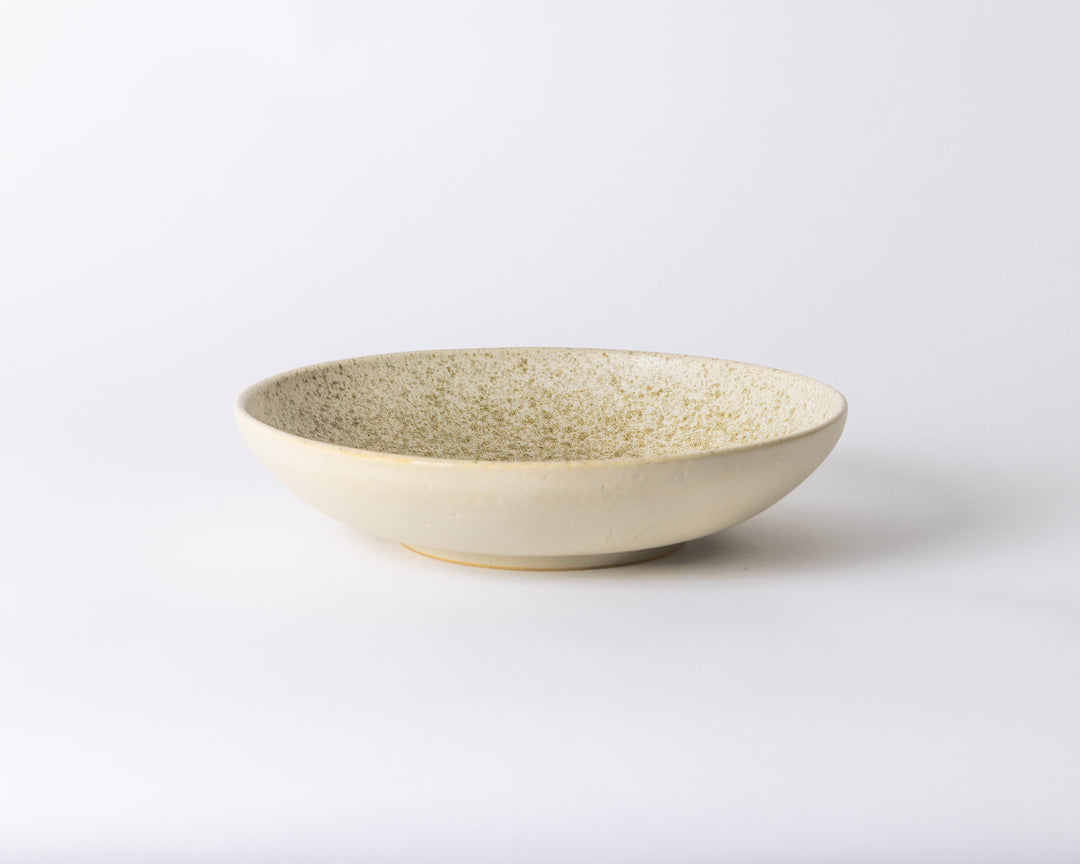
We also use reactive glaze for all our other Portuguese dinnerware!